AI Is Saving Time. Why Does Work Feel Heavier?
Suppose an AI assistant helps you finish a component much faster than expected.
The layout is there. The repetitive code is handled. A problem that would have occupied the afternoon now looks manageable before lunch.
What happens to the time that remains?
You could use it to check accessibility, simplify the implementation, or step away for a while. You could also start another task, ask the assistant to work on a second feature, and spend the afternoon reviewing both.
The original task became easier. The working day may have become more demanding.
That possibility deserves more attention than a demonstration of how quickly the first version appeared.
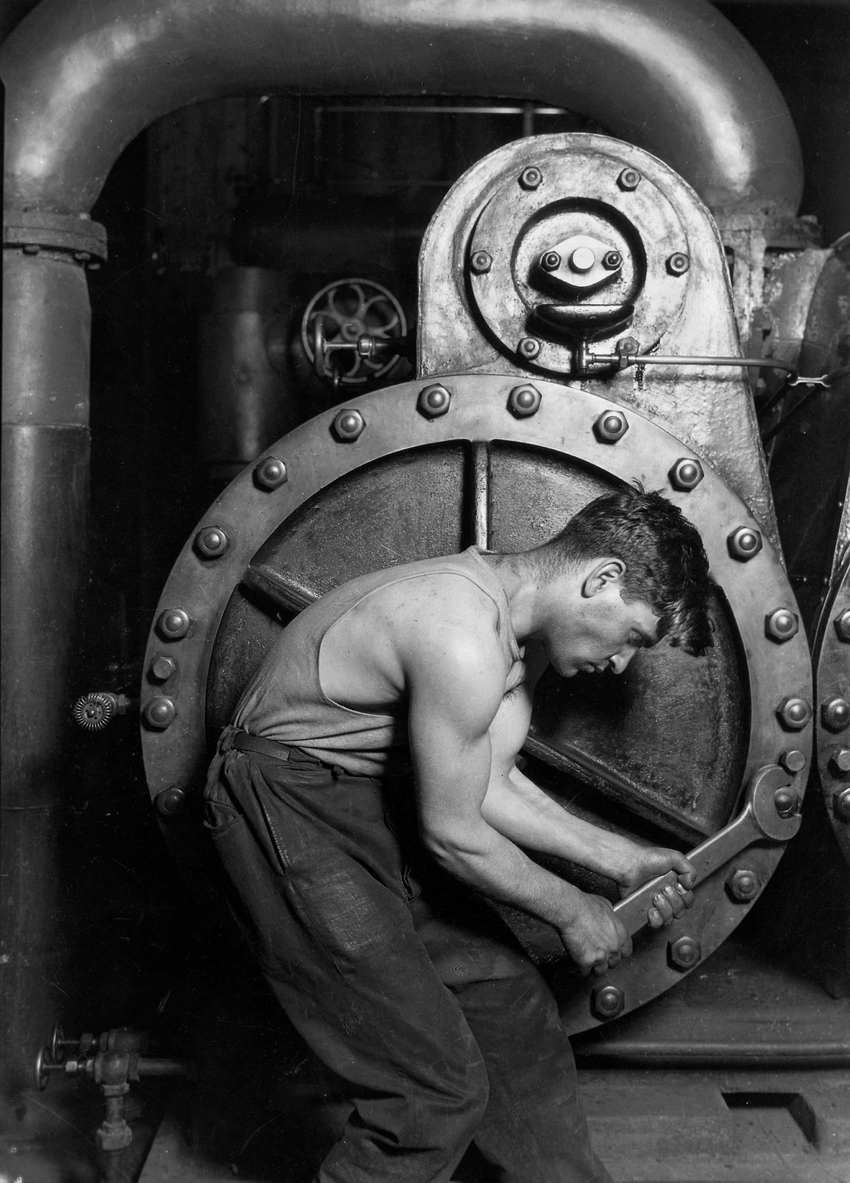
Lewis Hine, Power house mechanic working on steam pump, 1920. A historical image of a person working within a larger machine, used here as a visual analogy. National Archives, record 69-RH-4L-2; public domain. Resized only.
Where the saved time goes
A tool can reduce the effort needed for a task. What happens next depends on the person and the organization around it.
If expectations stay roughly the same, faster execution can create room for better work or a less crowded day. If expectations expand immediately, the gain becomes additional output.
Neither outcome is inevitable. But the second can happen quietly. Something took an hour yesterday, so another request now fits beside it. A quick prototype makes a previously postponed idea seem possible. The list of things that could be done grows alongside the ability to do them.
For a freelancer, the pressure can come from inside as well. Finishing early may feel like a reason to accept another piece of work. There does not have to be a manager demanding more.
The important decision is what the saved capacity is for. Without that conversation, the next available task can make the decision for everyone.
The work after the answer
In frontend development, producing a component is only part of delivering a feature.
Someone still needs to check how it behaves with missing data, whether a keyboard user can reach the controls, and what happens when a request fails. The code also has to fit the application that will carry it after the conversation ends.
An assistant can help with those checks. Its help still needs to be judged against actual requirements and behavior.
Consider a team that uses the time saved on one feature to begin several more. It now has more work in review, more possible interactions between changes, and more unfinished decisions competing for attention. That is a plausible result of the workflow, even if every individual generation was quick.
A measurement that ends when the code appears would miss most of that afternoon.
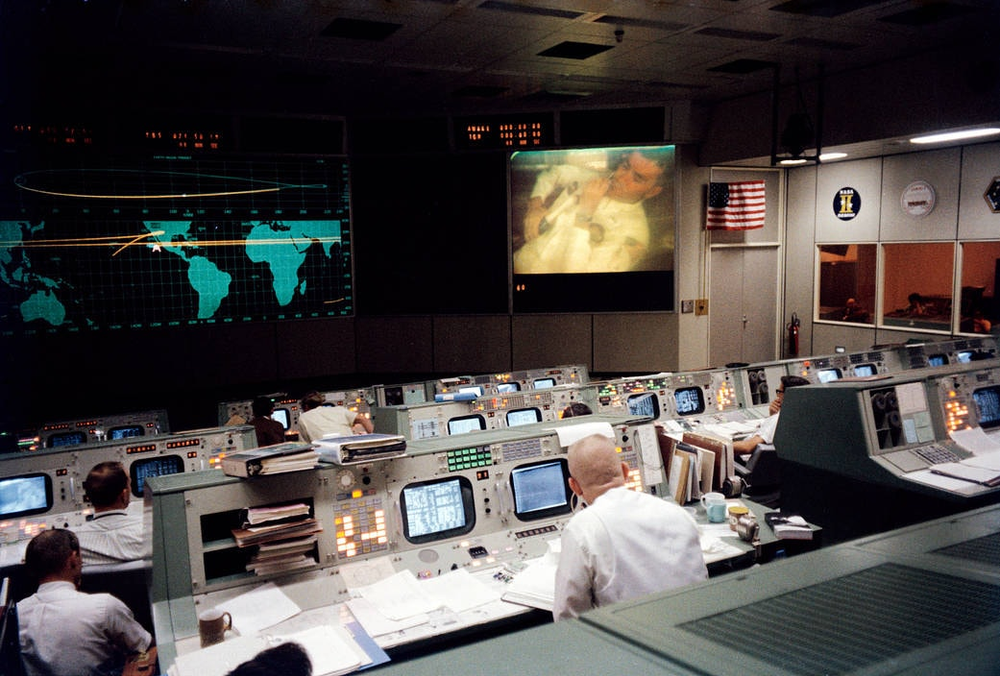
Apollo 13 mission control, Houston, April 13, 1970. Photograph: NASA, used under NASA's media usage guidelines. Resized only.
Speed and strain can coexist
A September 3, 2026 research preprint examined AI adoption at one software development services company through meetings and interviews with 21 professionals. Participants described concerns including responsibility for AI-assisted work, changes to their sense of craft, and increased cognitive demands.
It is a qualitative case study at one company. It cannot establish how common those experiences are across the industry or prove that AI causes heavier workloads everywhere. Its value here is showing that adoption has a human cost that output counts can leave out.
There is evidence of benefits too. A July 2026 mixed-methods field study reported that developers valued assistance with repetitive and structured work. Its findings also linked the usefulness of different interaction modes to the kind of task being performed.
Those findings leave room for a more practical question than whether AI is good or bad for work: which parts of a particular workflow are becoming easier, and which demands are being added around them?
Responsibility stays with someone
A generated answer can arrive before the person reviewing it has had time to build a clear understanding of the problem.
That gap creates work. The reviewer has to reconstruct the assumptions, compare the result with the intended behavior, and decide whether accepting it is justified. When the result is wrong, they also have to work out where the misunderstanding began.
Reading familiar code can be much faster than writing it from scratch, and useful explanations can speed up understanding.
The difficult case is work that looks plausible while remaining hard to verify. Producing more of it does not automatically increase the amount a person can responsibly approve.
If the person remains accountable for the result, the schedule needs to leave them enough room to understand it. Otherwise, the tool's speed becomes pressure to sign off sooner.
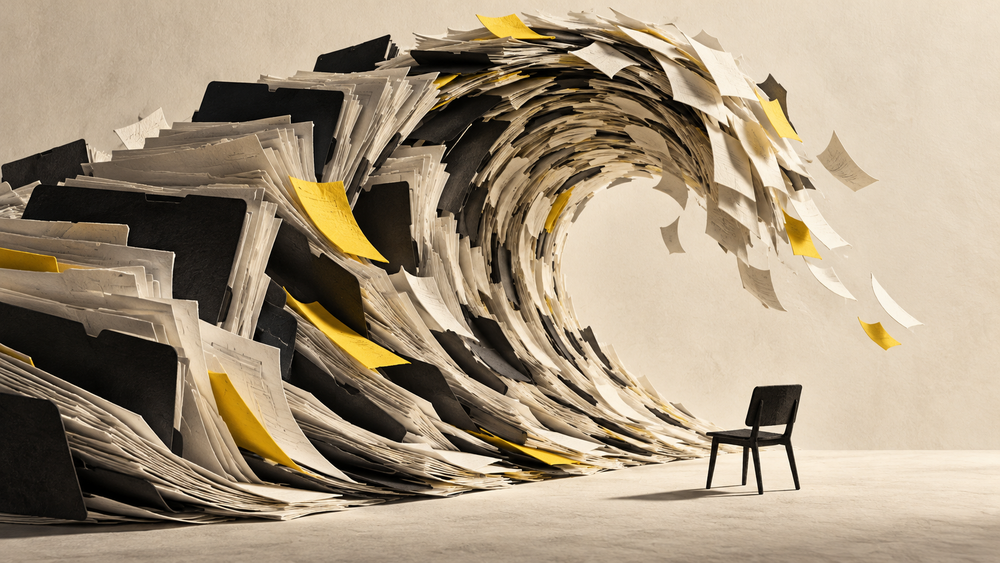
The queue can grow faster than the person responsible for it can decide. Original AI-generated editorial illustration created for devKPF using OpenAI image generation.
A full queue is still a full queue
There is also a difference between having more time and having less unfinished work.
Several parallel conversations can keep producing suggestions while you are busy elsewhere. Each can create another decision: accept the change, investigate a warning, answer a question, or repair an assumption.
Some parallel work is useful. It becomes harder to manage when every thread needs attention at once and there is no clear order in which to finish them.
A team can address that without giving up the tool. It can limit how many changes enter review together, keep acceptance criteria clear, and count review and correction as part of the work. A person working alone can also decide to finish one thing before using the newly available capacity to begin another.
Automation gives more options. Choosing fewer active commitments remains an option too.
Give the gain a purpose
A lighter day needs to be an allowed outcome.
That might mean completing the agreed work without adding another task. It might mean spending the saved time on testing that used to be squeezed out. It could mean making room for learning, documenting a difficult decision, or handling an interruption without pushing the day into the evening.
These are useful outcomes even when they do not produce a dramatic increase in visible output.
A fair evaluation of an AI workflow should follow the work beyond generation: how long it takes to reach a checked result, how much correction it needs, and how much unfinished work remains around it.
If a task becomes faster but the day feels heavier, examine what was added after the time was saved. The next improvement may require a decision about workload that another tool cannot make for you.
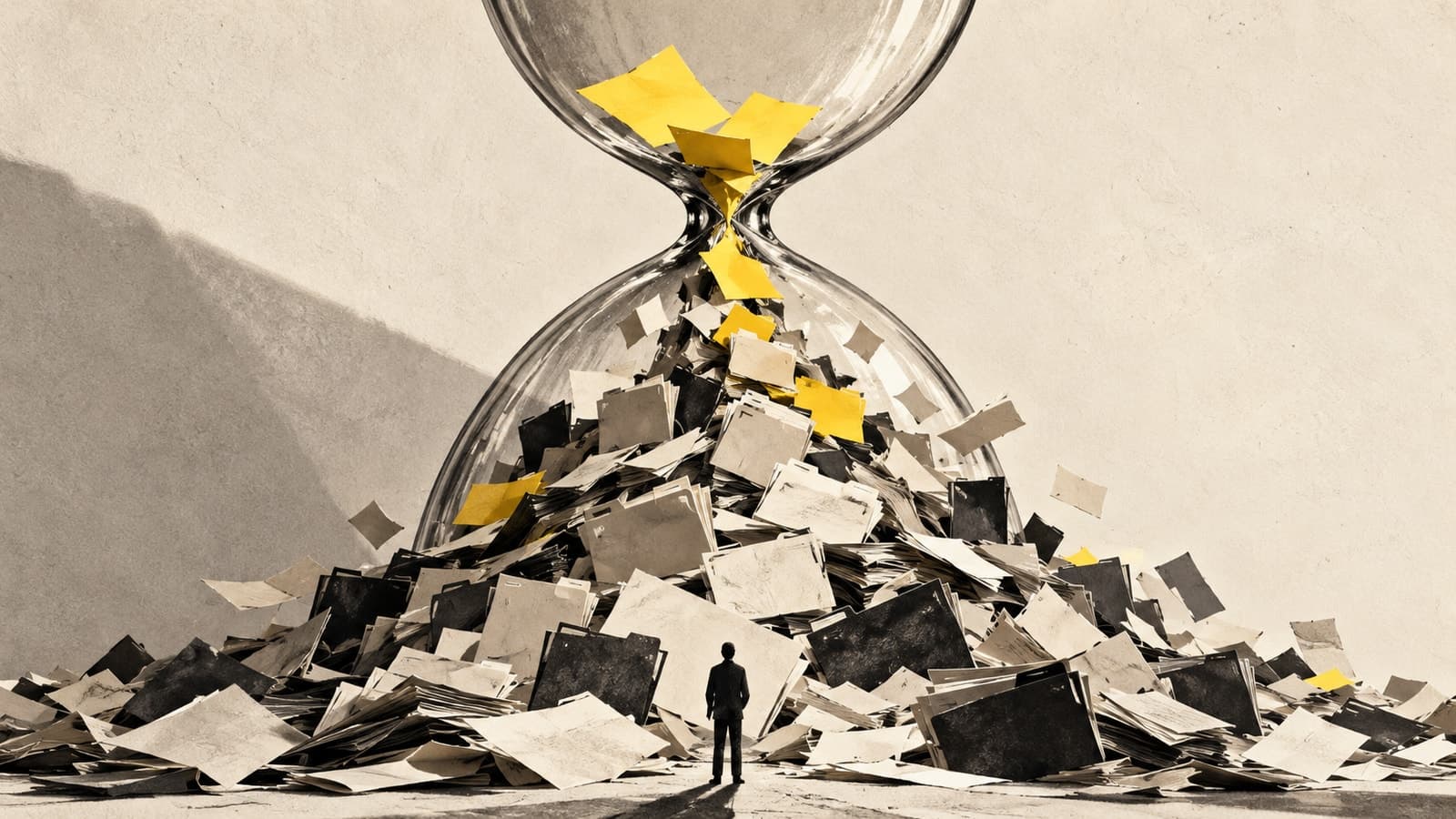
Cover illustration: Time Saved, Work Added, original AI-generated editorial artwork created for devKPF using OpenAI image generation.