AI Video and the Slow Collapse of Trust
There’s a fear I’ve had for a while now, and lately it doesn’t feel far off anymore.
AI has been getting better so quickly that some of the things that used to sound unrealistic a few years ago now feel completely normal. You can already see it in the content people consume every day.
Images Were the First Sign
AI-generated images were probably the first big sign.
At first, they felt easy to spot. They looked weird, overcooked, almost novelty-level. But that gap is closing fast.
Now they’re being used in actual marketing campaigns. Content creators use them for thumbnails. Some publishers and even the kind of pages that pretend to be journalism use them to grab attention and farm clicks.
Music came next, and honestly, I don’t entirely see that as a bad thing. For creators, AI-generated music can actually be helpful. It lowers the barrier. It gives people a way to experiment without needing a full studio setup or years of technical skill.

But there’s one area where AI’s progress really bothers me.
Video Feels Different
Video is the one that really changes the mood for me.
If you spend enough time on Facebook Reels, YouTube Shorts, Instagram, or especially TikTok, you’re going to run into AI-generated videos. Some of them are obvious nonsense. Some are clearly just people testing how far the tools can go. Better prompts, better motion, better detail, more realism.
But even when it’s framed as experimentation, it still adds up.
Videos take up space. Storage, bandwidth, attention.
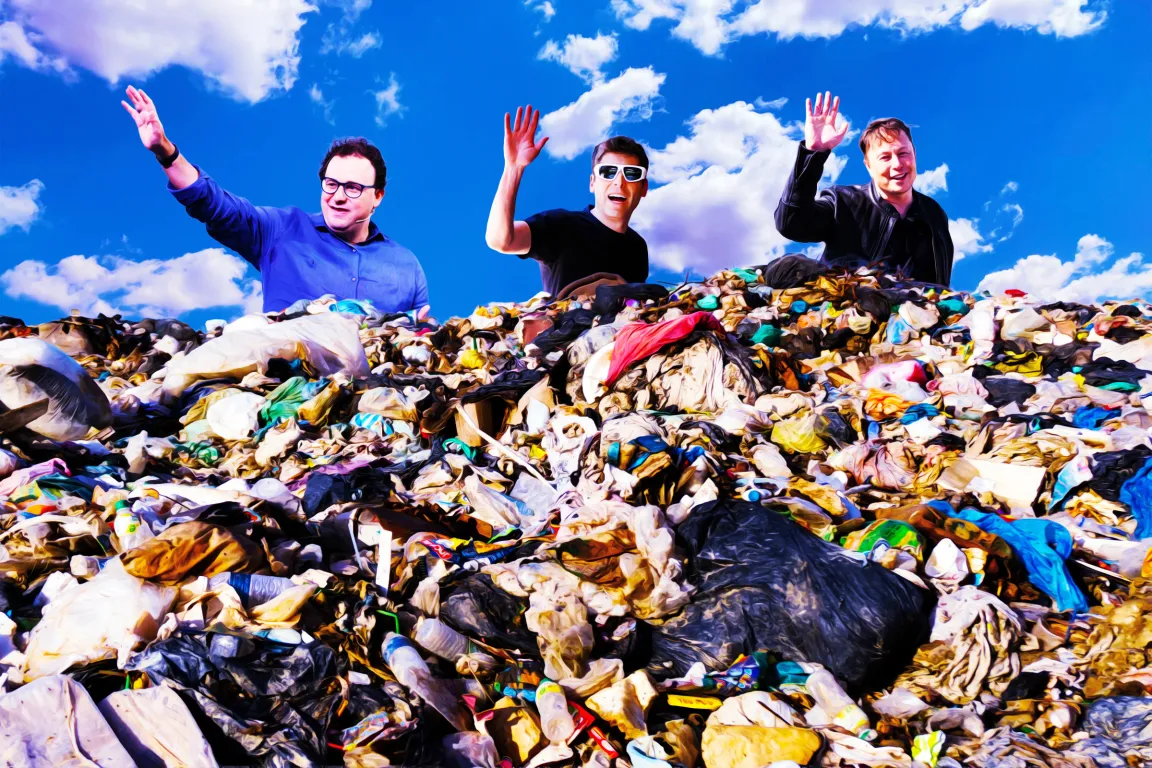
And when more and more of the internet gets filled with AI-generated videos that don’t really add anything meaningful, it starts to feel like a kind of digital pollution.
That’s the part I can’t shake.
Pollution isn’t always something physical. Sometimes it’s just too much noise. Too much low-value content flooding the same spaces where real things are supposed to live.
The Real Problem Is Trust
What bothers me even more is not just the existence of fake videos.
It’s what they do to people’s sense of what is real.
I’ve seen older people, including people close to me, get fooled by AI-generated videos. Not because they’re gullible. Not because they’re stupid. But because video has always carried a certain kind of weight. People are used to treating it as proof.
If there’s footage, then something must have happened.
That assumption used to make sense.
Now it’s starting to break.
I’ve had conversations where I had to point out the exact parts of a video that gave it away. Strange movement. Weird transitions. Impossible details. Sometimes I’ve had to explain it almost like I was doing technical breakdown just to convince someone that what they were watching wasn’t real.
That’s when it starts to feel serious.
Because if regular people now need a trained eye just to tell whether a video is real, then the burden has shifted way too much onto the public.
And of course, the moment that happens, bad actors are going to take advantage of it.
Political groups can use AI to fake progress, spread accusations, stage fake moments, or build false public sentiment. A convincing lie can now be packaged in a format people instinctively trust.
That’s what makes this dangerous.
When reality becomes cheap to imitate, trust becomes harder to keep.
The Darker Possibility
The darker fear for me is not even social media.
It’s evidence.
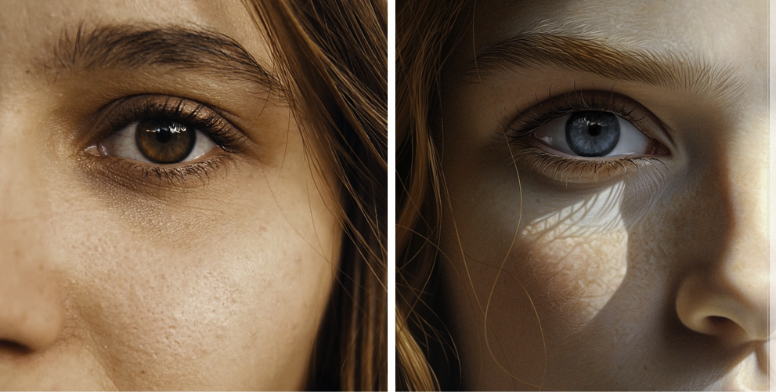
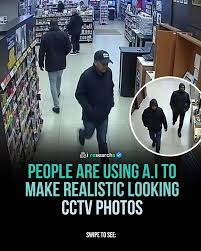
Imagine a future where criminals, especially organized ones, can alter or completely forge CCTV footage.
Imagine a victim presenting real evidence.
Then imagine the accused presenting manipulated footage that makes them look innocent.
Now the victim is not only dealing with the original crime, but also with a system that can be confused, delayed, or even overturned by synthetic evidence.
That is a horrifying possibility.
Because at that point, this stops being about internet slop or fake viral clips.
It becomes a justice problem.
A legal problem.
A societal problem.
If generated or altered video can contaminate evidence, then the damage spreads far beyond the feed. It reaches courtrooms, investigations, insurance claims, public records, and the broader idea of truth itself.
That’s why I don’t see this as some far-off sci-fi issue.
To me, it’s an integrity issue.
AI Itself Is Not the Enemy
I don’t think AI itself is the villain.
I use AI. I understand why people are excited about it. I see the creative value in it. In some areas, I even think it opens doors for people who otherwise would not have had access.
But the problem is that the capability is improving faster than our systems, culture, and institutions can adapt to it.
That’s the part that worries me.
The danger is not just that AI can generate convincing video.
It’s that we may allow synthetic media to flood the internet, public discourse, and even evidence pipelines before we build the standards and protections needed to deal with it properly.
And once trust starts to erode, it’s not easy to get back.
That’s what makes this feel close now.
Not because the technology exists.
But because people are already living with its effects before they fully understand what it can do.
And it’s only going to get better from here.