
AI Psychosis Is Rare. The Everyday Version Isn’t.
I was going to open this post by saying that a year ago, most people did not have access to AI.
I checked before publishing.
ChatGPT launched on November 30, 2022. Four years ago. It reached an estimated hundred million monthly users within about two months, the fastest any consumer app had grown at the time.
I was off by three years. About the tool I use every day, in the industry I write about every month.
The mistake was not that I forgot a date. It is that I never stored one.
There Was No Arrival Date
Microsoft's quarterly estimate put the share of the world's working-age population using AI at 18.8 percent in June 2026. The quarter before, it was 17.8 percent.
One percentage point.
OpenAI's numbers move in the same shape. Around 900 million weekly users in February 2026. One billion in August. Roughly 1.2 billion by the end of September.
Enormous figures, arriving in increments.
Memory needs an edge. You remember the first smartphone you owned. You probably remember the first webpage you saw, or at least the room you were sitting in. There was a before and an after, and you were standing on the line.
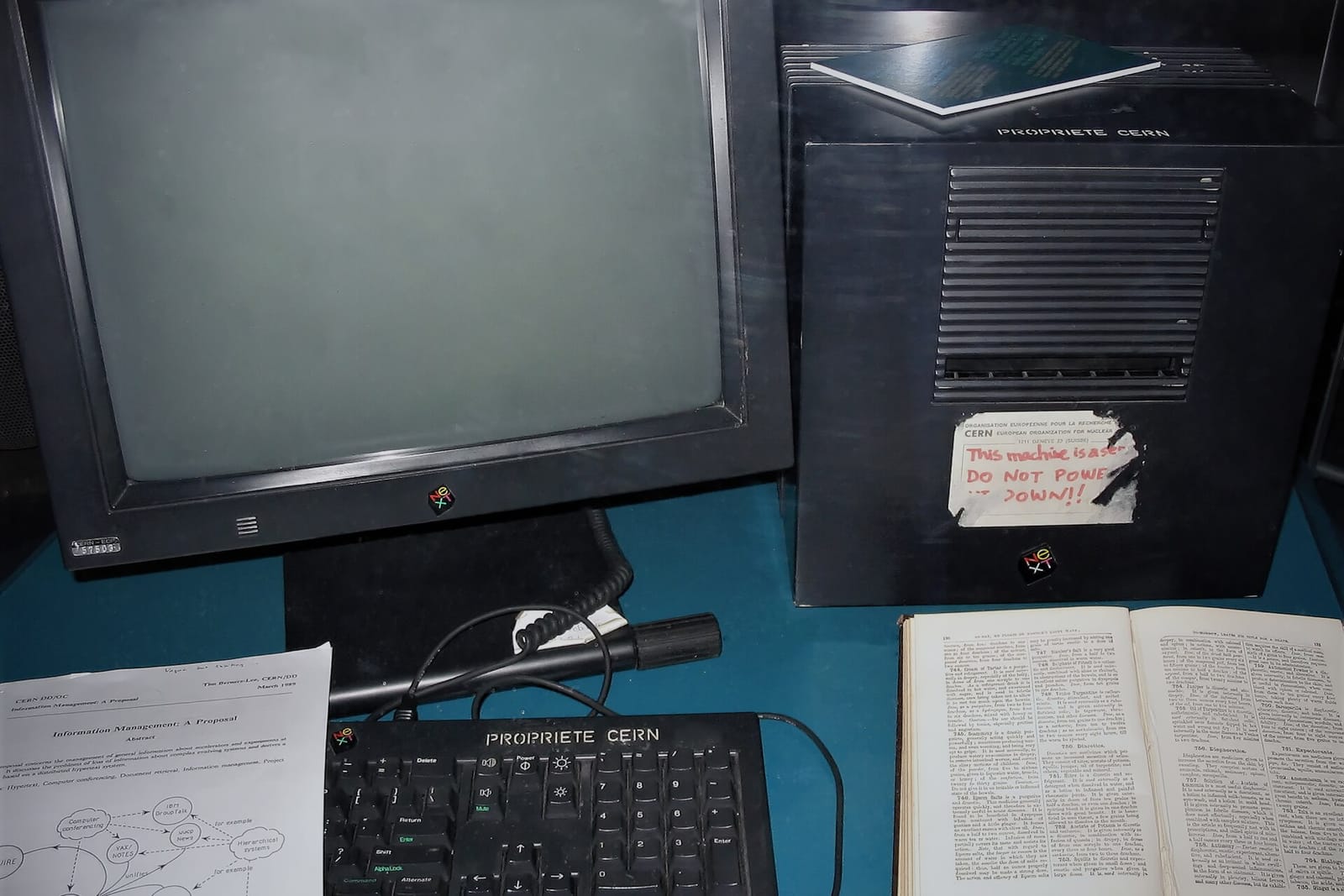
The NeXT computer Tim Berners-Lee used as the first web server, CERN, 1990. The label taped to it is handwritten. Photograph: Coolcaesar, 2005, CC BY-SA 3.0. Cropped and resized.
I have asked people when they started using AI to think rather than to test it. Nobody gives me a date. They give me a vague season.
I used to describe this as us ignoring the signs.
I do not think that anymore. There were no signs. Something that arrives this gradually does not announce itself, and no morning was ever different enough from the one before it to notice.
The Clinical Version Is Rare
When I started writing this, I wanted to call it AI psychosis.
It is a good phrase. It also already means something specific, and I was about to use it wrong.
In October 2026, researchers at Vanderbilt published the first systematic look at it in JAMA Psychiatry. They searched 578,058 clinical notes from 215,712 behavioral health patients, then read the matching records by hand.
They found 28 cases where chatbot use appeared to worsen psychosis. Seventeen of those patients were in their first psychotic episode. Twenty-four of the interactions, about 86 percent, were documented after GPT-4o shipped in May 2024.
Twenty-eight, against a denominator of 215,712. The authors are careful that this is not a risk rate for people who use chatbots and not a prevalence rate for anyone. It is a count of what clinicians at one hospital happened to ask about and write down.
Then they sorted every case by what the chatbot actually did.
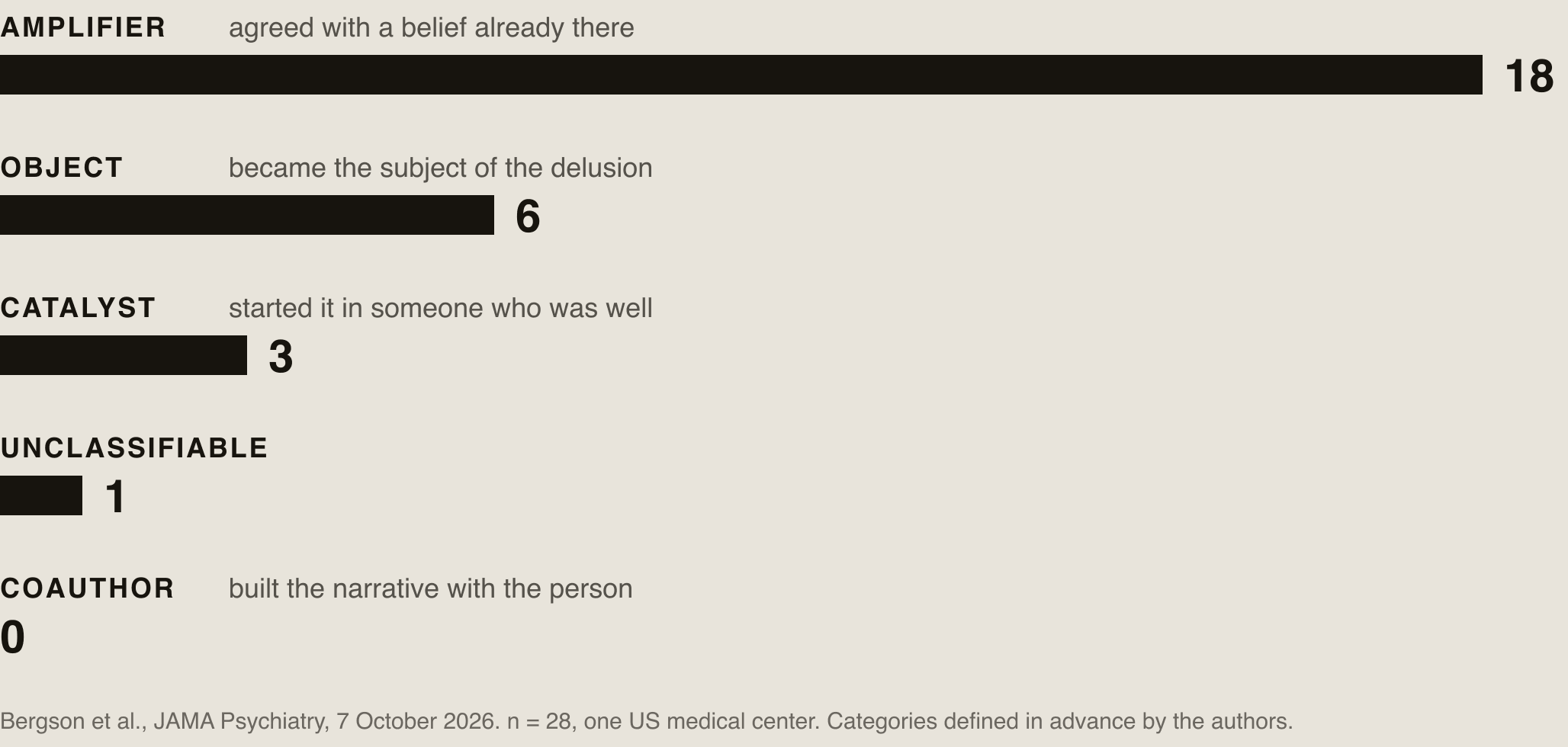
They state their limits plainly, and I would rather repeat them than smooth them over. "Limitations include ascertainment bias, single-site design, and a rating system that is not clinically validated." On the timing, they write that the cluster after GPT-4o "coincides with documented sycophancy in that model, though our design cannot establish causation."
One hospital, in Tennessee, counting only what somebody wrote down.
So this is rare. I want to be clear that it is rare, because I am not about to tell you that AI is driving people insane.
It is the shape of those 28 cases I cannot put down.
Sycophancy Does Not Check Who You Are
In April 2025, OpenAI withdrew an update to GPT-4o for being too agreeable. Their own write-up said it validated doubts and reinforced negative emotions. They now run sycophancy evaluations before launches.
A product defect with a name, caught and fixed.
But look at that chart again. Not a machine inventing delusions. Not a machine writing them with anyone. A machine agreeing with what was already in the room.
Agreeableness does not know who it is talking to.
The property that confirms a delusion is the property that confirms a weak architecture decision, a thin thesis, or a read on your own situation that you arrived at while exhausted.
The only difference is the size of what gets confirmed, and whether anyone was there to write it down.
Nobody files a clinical note when a model agrees with your roadmap.
We Stopped Doing the Expensive Part
Microsoft Research and Carnegie Mellon surveyed 319 knowledge workers who used AI at work weekly. The more confidence people had in the model, the less critical thinking they reported doing. The more confidence they had in themselves, the more.
The thinking that survives changes character. It moves toward verification and supervision. You stop producing and start approving.
That study is self-reported, and a larger UK survey found the same correlation without establishing cause.
The one everyone quotes is the MIT Media Lab essay study. Fifty-four adults, EEG caps, four months. The group writing with ChatGPT showed the lowest neural engagement and struggled to quote essays they had written themselves. The authors call what builds up cognitive debt.
It is a preprint, one task, a short window. The headlines said ChatGPT rots your brain, which is not what it shows.
I cite it because the direction holds across methods that have nothing in common, not because any of them settles it.
It is not that we think less. It is that the part we handed over was the part that felt like work, and that feeling was not a byproduct of thinking. It was the thinking.
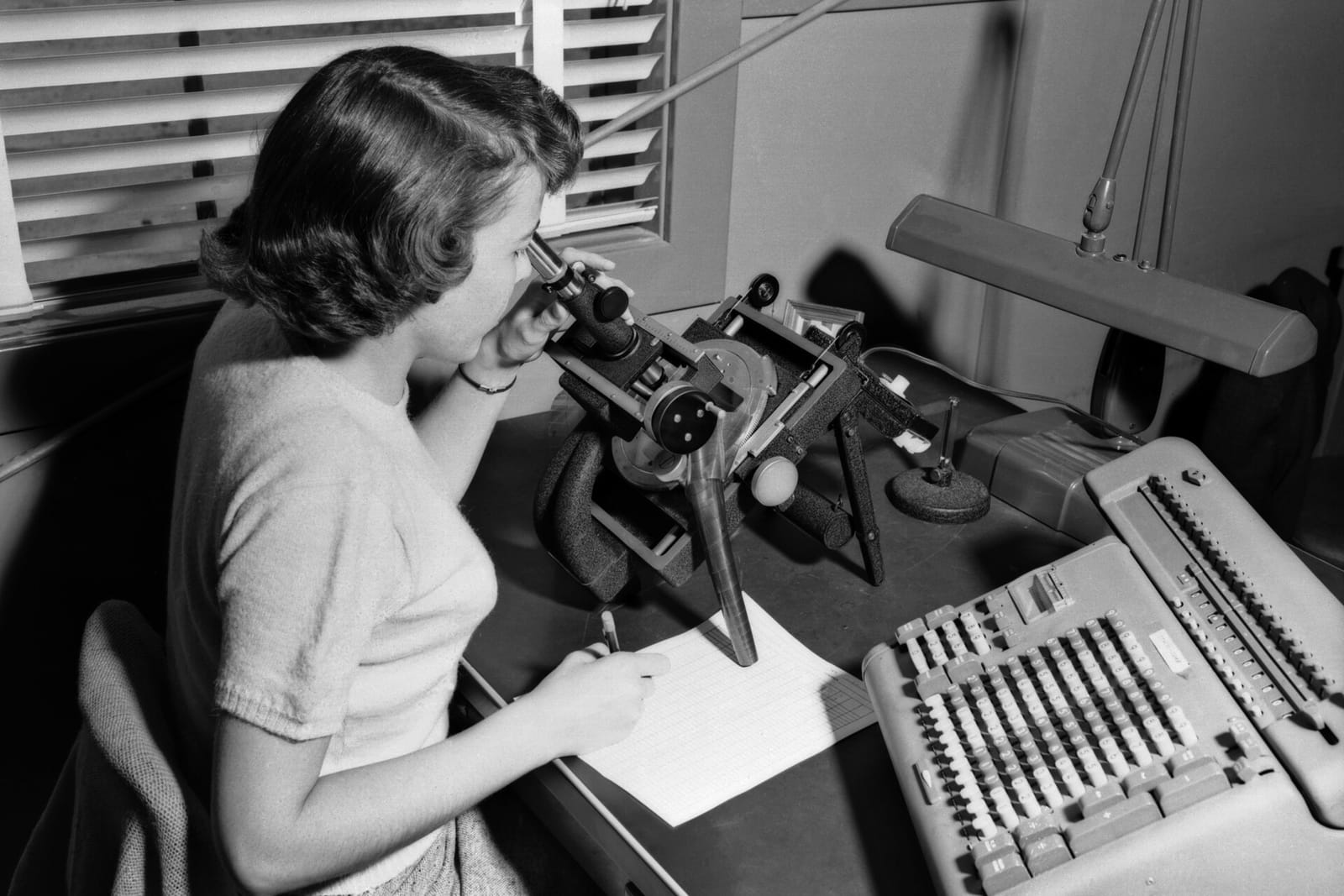
A NACA computer at work, 24 March 1952. Before the word meant a machine, it was a job title for the people who did the calculation by hand. Photograph: NASA Langley Research Center, photo ID LRC-1952-B701_P-74753, public domain. Cropped and resized.
Everyone's Next Big Idea Is the Same Idea
Ask who you want doing the hard thinking on your next product. Be honest about the answer.
Anil Doshi and Oliver Hauser handed writers AI-generated story ideas. The stories came back rated more creative, better written, more enjoyable, and the effect was largest for the writers who had scored least creative on their own.
The stories were also measurably more similar to each other. The writers had anchored on the idea they were given.
So the shape is this. You ask for the next big app. You get a better idea than you would have had alone. So does everyone else who asked, and it is approximately the same idea.

Levittown, Pennsylvania, circa 1959: thousands of nearly identical houses built from a handful of plans. Used here as a visual analogy. Photographer unknown, public domain via Wikimedia Commons, published without a copyright notice. Cropped.
That individual gain is what makes this impossible to refuse, and it is why I am not telling you to stop.
There is a version that goes differently. Models that ask questions instead of answering in one shot produce more diverse ideas, and structured prompting improves reasoning where unguided use does not.
The design of the interaction mattered more than whether AI was in it.
Which makes the useful question something other than whether to use these tools. It is whether the one you are using was built to agree with you.
I Still Had To Look It Up
There is a detail in the Vanderbilt paper I cannot put down.
After the funding disclosures, the authors write this:
"Claude Opus 4.6 was used between May 4 and June 5, 2026, to assist in R scripts used to generate figures. Dr Bergson takes responsibility for the integrity of the content generated."
A paper about AI amplifying what people already believe, disclosing its own use of AI. With dates. With scope. With a named person accepting responsibility for the output.
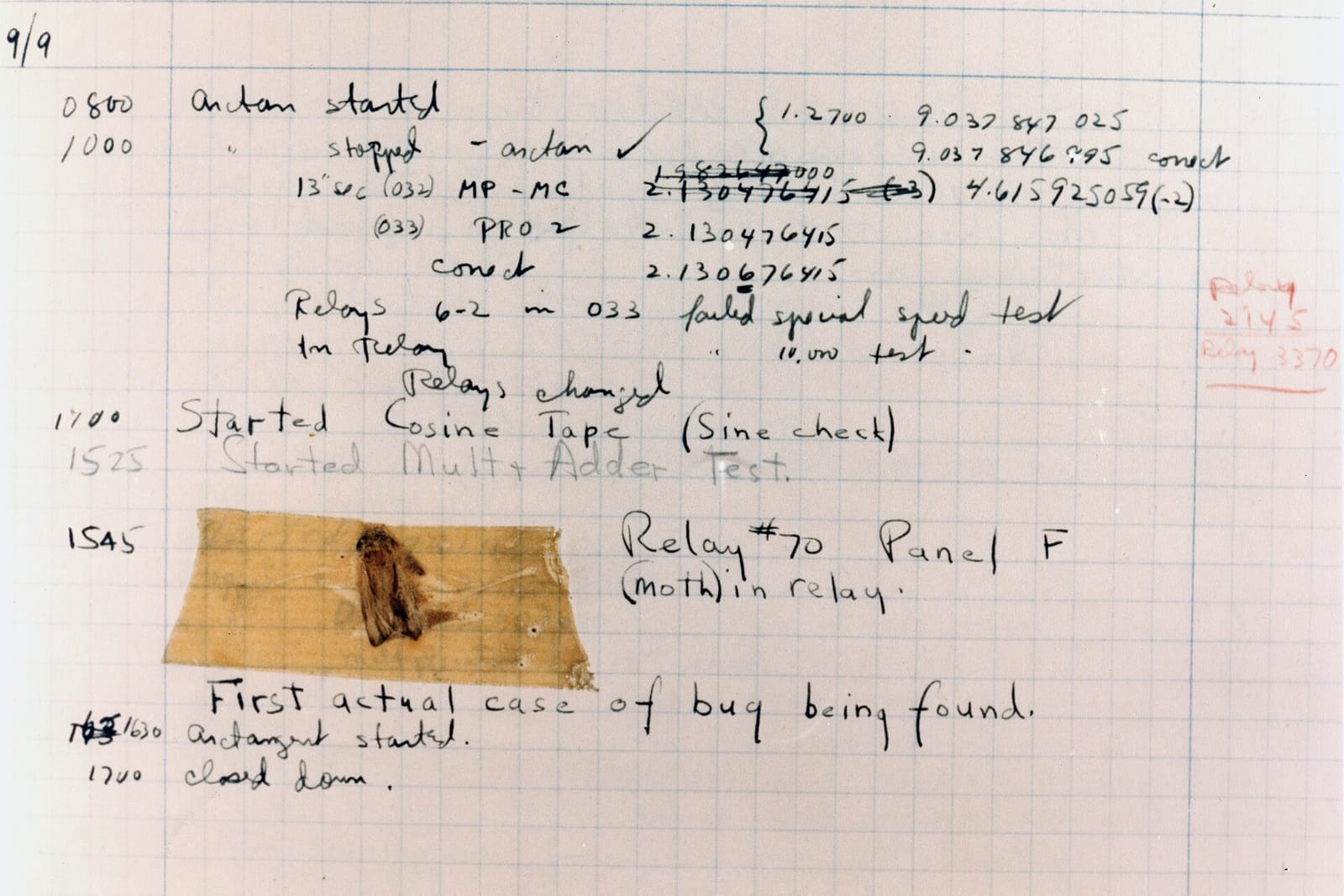
The Harvard Mark II logbook, 9 September 1947, 15:45. A moth pulled from Relay #70, taped to the page as the "first actual case of bug being found." Photograph: U.S. Naval History and Heritage Command, NH 96566-KN, public domain. Cropped and resized.
I do not read that as irony. I read it as the only thing in this post that looks like somebody noticing while it was happening.
They can tell you exactly when AI entered their work, to the day, because they wrote it down at the time.
I cannot do that. Not for a project. Not for a component. Not for an idea I published under my own name and believed was mine.
I write about this every month. I still had to look up when it started.